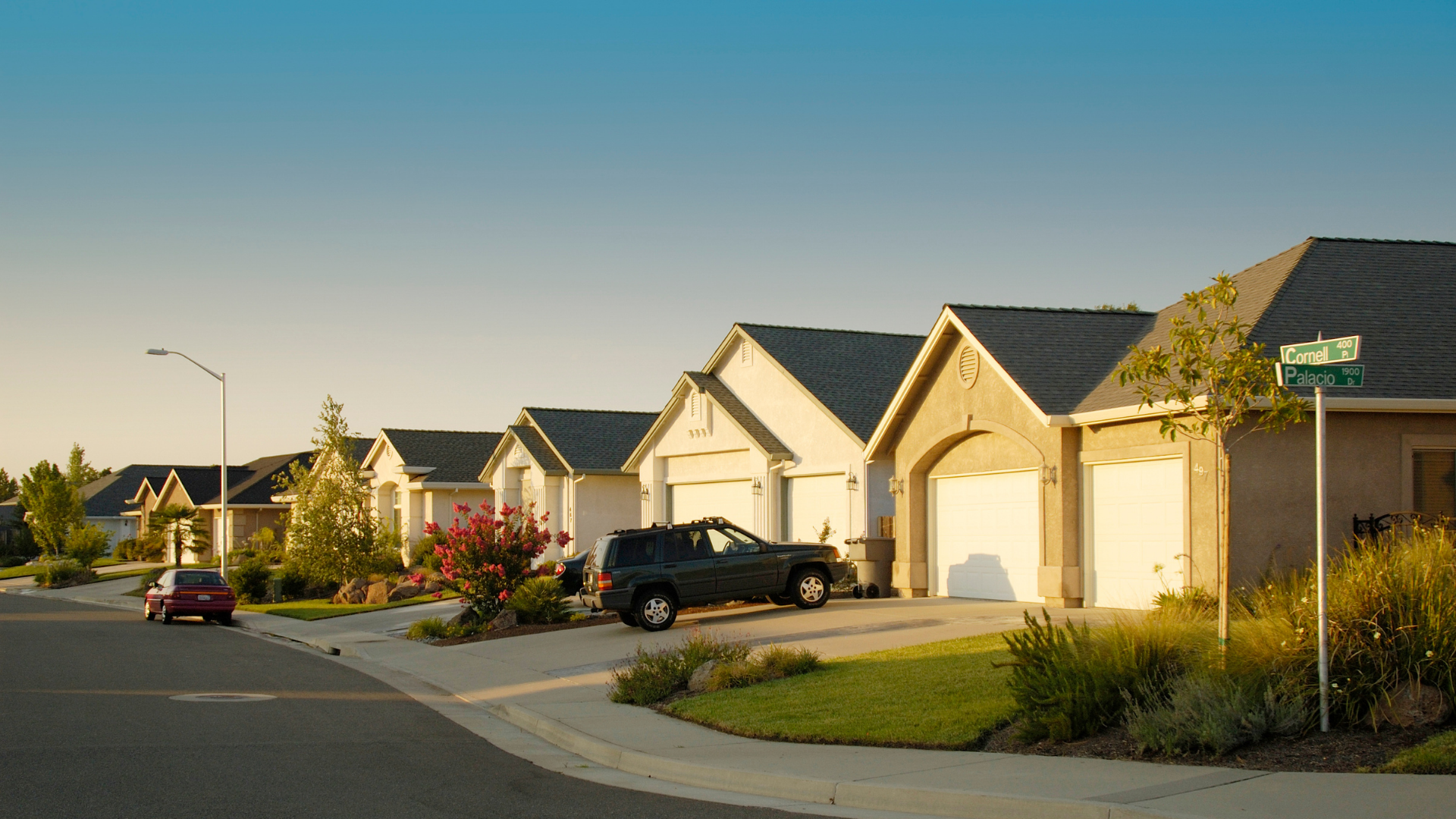
Downpayment Options

Katherine Martin • February 21, 2024

Your downpayment refers to the initial payment you make when buying a property through mortgage financing. A downpayment is always required when purchasing, because in Canada, lenders are only allowed to lend up to 95% of the property value, leaving you with the need to come up with at least 5% for a downpayment.


In fact, securing mortgage financing with anything less than 20% down is only made possible through mortgage default insurance. Canada has three default insurance providers: the Canadian Mortgage and Housing Corporation (CMHC), Sagen (formerly Genworth Canada), and Canada Guaranty. There is a cost for default insurance which is usually rolled into the total mortgage amount and is tiered depending on how much you put down.


As your downpayment can be a significant amount of money, you probably need a plan to put this money together. So, let’s take a look at some of the options you have to come up with a downpayment.


Money from your resources


If you’ve been saving money and have accumulated the funds and set them aside for to use for your downpayment, you'll need to prove a 90-day history of those funds. As far as the lender is concerned, this is the most straightforward way to prove a downpayment.


Any large deposits to your bank account that aren’t from payroll will require you to prove the source of funds. For example, if you recently sold a vehicle, you’ll need to provide the paperwork as proof of ownership, which corresponds to your account’s deposit. Or, if you have funds in an investment account that you’ve transferred over, statements of that transfer or account would suffice.


You have to prove the source of your downpayment funds to the lender when qualifying for a mortgage to help prevent money laundering.


Funds from the sale of another property


If you’ve recently sold a property and you’re using the proceeds of that sale as the downpayment from your new purchase, you can provide the paperwork from that transaction to substantiate your downpayment.


RRSPs through the Home Buyer’s Plan


Okay, so let’s say you don’t have all the money set aside in your savings, but you do have cash in your RRSP. Assuming you’re a first-time homebuyer, you can access the funds from your RRSP Tax-Free to use as a downpayment.


You’re able to access up to $35k individually or $70k as a couple. The money has to be paid back over the next 15 years. If you’d like more information on what this program looks like, please get in touch.


Gifted downpayment


Now, if you don’t have enough money in your savings, but you have a family member who is willing to help, they can gift you funds for your downpayment. With the increased cost of living, making it harder to save for a downpayment, receiving a gift from a family member is becoming increasingly commonplace.


Now, to qualify, the gift has to come from an immediate family member who will sign a gift letter indicating there is no schedule of repayment and that the gift doesn’t have to be repaid. Proof that the money has been deposited into your account is required through bank statements.


Gifted funds can make up part of or the entire amount of downpayment. For example, if you purchase a property for $300k and have $10k saved up, your parents can gift you the remaining $5k to make up the total 5% downpayment.


Borrowed downpayment


Suppose you aren’t fortunate enough to have a family member who can gift you a downpayment, but you have excellent credit and a high income compared to the amount you’re looking to borrow. In that case, you might qualify to borrow part or all of your downpayment.


It’s possible to borrow your downpayment as long as you include the payments in your debt service ratios. Typically this is 3% of the outstanding balance.


So there you have it, to qualify for a mortgage, you’ll need to come up with a downpayment. That can be through your resources, a property you sold, an RRSP, a gift from a family member, borrowed funds, or a combination of all five sources.


If you’d like to discuss your downpayment or anything else related to mortgage financing; it’s never too early to start the conversation about getting pre-approved for a mortgage. Please connect anytime. It would be a pleasure to work with you!


Katherine Martin


Origin Mortgages

Phone: 1-604-454-0843
Email: 
kmartin@planmymortgage.ca
Fax: 1-604-454-0842

RECENT POSTS

By Katherine Martin February 4, 2026
Owning a vacation home or an investment rental property is a dream for many Canadians. Whether it’s a cottage on the lake for family getaways or a rental unit to generate extra income, real estate can be both a lifestyle choice and a smart financial move. But before you dive in, it’s important to know what lenders look for when financing these types of properties. 1. Down Payment Requirements The biggest difference between buying a primary residence and a vacation or rental property is the down payment. Vacation property (owner-occupied, seasonal, or secondary home): Typically requires at least 5–10% down, depending on the lender and whether the property is winterized and accessible year-round. Rental property: Usually requires a minimum of 20% down. This is because rental income can fluctuate, and lenders want extra security before approving financing. 2. Property Type & Location Not all properties qualify for traditional mortgage financing. Lenders consider: Accessibility : Is the property accessible year-round (roads maintained, utilities available)? Condition : Seasonal or non-winterized cottages may not meet standard lending criteria. Zoning & Use : If it’s a rental, lenders want to ensure it complies with municipal bylaws and zoning regulations. Properties that fall outside these norms may require financing through alternative lenders, often with higher rates but more flexibility. 3. Rental Income Considerations If you’re buying a property with the intent to rent it out, lenders may factor the rental income into your mortgage application. Long-term rentals : Lenders typically accept 50–80% of the expected rental income when calculating your debt-service ratios. Short-term rentals (Airbnb, VRBO, etc.) : Many traditional lenders are cautious about using projected income from short-term rentals. Alternative lenders may be more flexible, depending on the property’s location and your financial profile. 4. Debt-Service Ratios Lenders use your Gross Debt Service (GDS) and Total Debt Service (TDS) ratios to determine if you can handle the mortgage payments alongside your other obligations. With investment or vacation properties, lenders may apply stricter guidelines, especially if your primary residence already carries a large mortgage. 5. Credit & Financial Stability Your credit score, employment history, and overall financial health still matter. Since vacation and rental properties are considered higher risk, lenders want reassurance that you can handle the additional debt—even if rental income fluctuates or the property sits vacant. 6. Insurance Requirements Rental properties often require specialized landlord insurance, and vacation homes may need coverage tailored to seasonal or secondary use. Lenders will want proof of adequate insurance before releasing mortgage funds. The Bottom Line Buying a vacation property or rental can be exciting, but financing these purchases comes with extra rules and considerations. From higher down payments to stricter property requirements, lenders want to be confident that you can handle the responsibility. If you’re considering a second property, the best step is to work with a mortgage professional who can compare lender requirements, outline your options, and find the financing that works best for you. Thinking about making your dream of a vacation or rental property a reality? Connect with us today.
By Katherine Martin January 28, 2026
Bank of Canada maintains policy rate at 2¼%. FOR IMMEDIATE RELEASE Media Relations Ottawa, Ontario January 28, 2026 The Bank of Canada today held its target for the overnight rate at 2.25%, with the Bank Rate at 2.5% and the deposit rate at 2.20%. The outlook for the global and Canadian economies is little changed relative to the projection in the October Monetary Policy Report (MPR). However, the outlook is vulnerable to unpredictable US trade policies and geopolitical risks. Economic growth in the United States continues to outpace expectations and is projected to remain solid, driven by AI-related investment and consumer spending. Tariffs are pushing up US inflation, although their effect is expected to fade gradually later this year. In the euro area, growth has been supported by activity in service sectors and will get additional support from fiscal policy. China’s GDP growth is expected to slow gradually, as weakening domestic demand offsets strength in exports. Overall, the Bank expects global growth to average about 3% over the projection horizon. Global financial conditions have remained accommodative overall. Recent weakness in the US dollar has pushed the Canadian dollar above 72 cents, roughly where it had been since the October MPR. Oil prices have been fluctuating in response to geopolitical events and, going forward, are assumed to be slightly below the levels in the October report. US trade restrictions and uncertainty continue to disrupt growth in Canada. After a strong third quarter, GDP growth in the fourth quarter likely stalled. Exports continue to be buffeted by US tariffs, while domestic demand appears to be picking up. Employment has risen in recent months. Still, the unemployment rate remains elevated at 6.8% and relatively few businesses say they plan to hire more workers. Economic growth is projected to be modest in the near term as population growth slows and Canada adjusts to US protectionism. In the projection, consumer spending holds up and business investment strengthens gradually, with fiscal policy providing some support. The Bank projects growth of 1.1% in 2026 and 1.5% in 2027, broadly in line with the October projection. A key source of uncertainty is the upcoming review of the Canada-US-Mexico Agreement. CPI inflation picked up in December to 2.4%, boosted by base-year effects linked to last winter’s GST/HST holiday. Excluding the effect of changes in taxes, inflation has been slowing since September. The Bank’s preferred measures of core inflation have eased from 3% in October to around 2½% in December. Inflation was 2.1% in 2025 and the Bank expects inflation to stay close to the 2% target over the projection period, with trade-related cost pressures offset by excess supply. Monetary policy is focused on keeping inflation close to the 2% target while helping the economy through this period of structural adjustment. Governing Council judges the current policy rate remains appropriate, conditional on the economy evolving broadly in line with the outlook we published today. However, uncertainty is heightened and we are monitoring risks closely. If the outlook changes, we are prepared to respond. The Bank is committed to ensuring that Canadians continue to have confidence in price stability through this period of global upheaval. Information note The next scheduled date for announcing the overnight rate target is March 18, 2026. The Bank’s next MPR will be released on April 29, 2026. Read the January 28th, 2026 Monetary Report